

Technology
GLIA NeuroTESTA: Developing Rapid miRNA Diagnostics at the Point of Care
GLIA’s NeuroTESTA platform is under active development, working toward a compact, field-ready diagnostic device. A finger-stick blood sample. A result in minutes. Objective biological information intended to complement clinical assessment — wherever it is needed.
What Is GLIA NeuroTESTA?
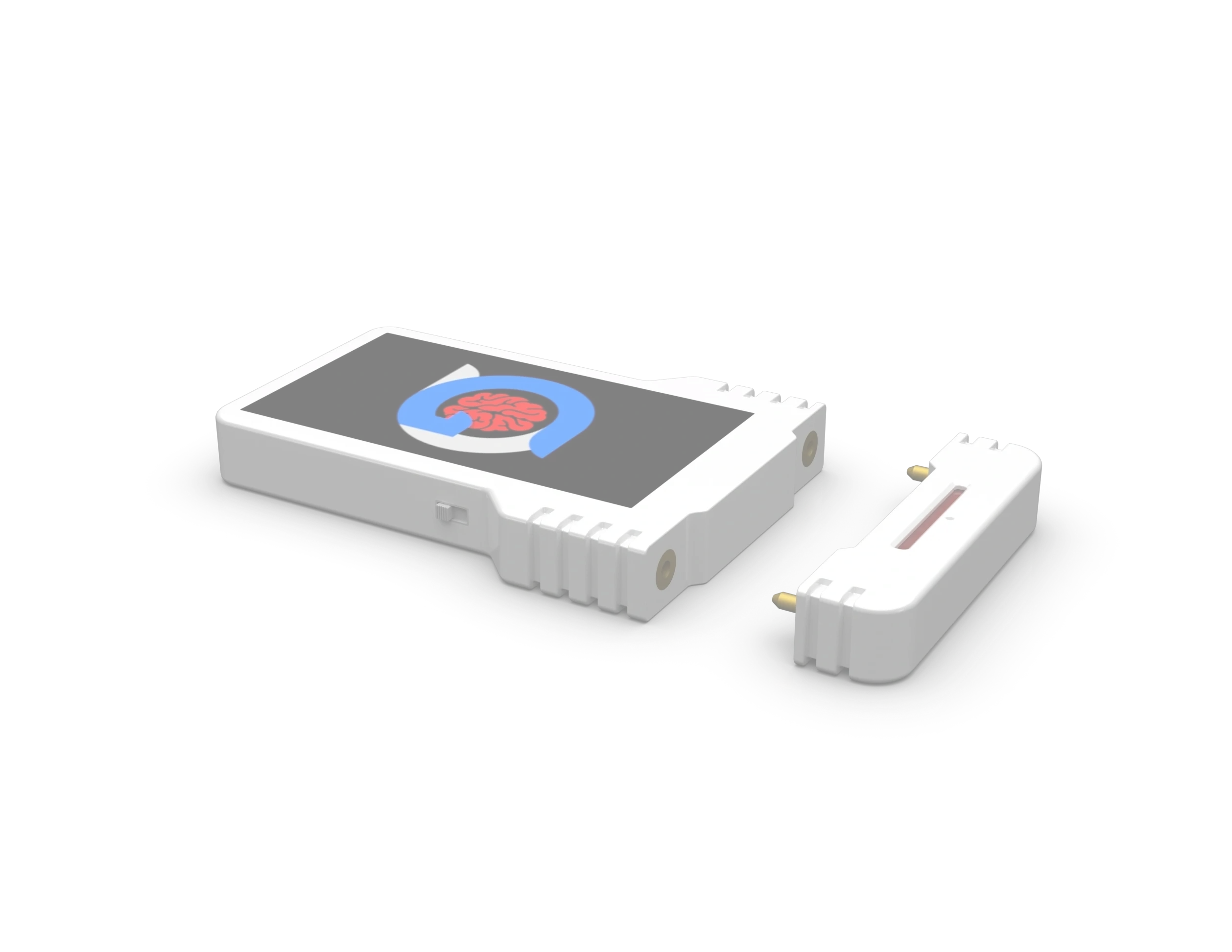
GLIA NeuroTESTA is GLIA Diagnostics’ proprietary point-of-care (PoC) platform under development for the rapid detection of brain-enriched microRNA biomarkers from a peripheral blood sample. The system is intended to integrate a single-use diagnostic cartridge with a compact reader device, enabling quantitative miRNA analysis without laboratory infrastructure, cold-chain requirements, or specialist operators.
The platform is being designed for deployment in the environments where TBI diagnosis is most urgent and most difficult: the sports sideline, the military forward operating base, the emergency department triage bay, and the remote clinical setting. Product specifications, performance characteristics and intended uses remain subject to ongoing development, validation and regulatory review.

Platform Design
How the Platform Is Designed to Work
The GLIA NeuroTESTA cartridge is being designed to use a microfluidic architecture intended to isolate, amplify, and detect a panel of miRNAs from a small whole-blood sample. The cartridge is intended to be self-contained, with reagents pre-loaded and stabilised for ambient storage — designed to reduce the cold-chain logistics that constrain conventional molecular diagnostics. These specifications remain subject to ongoing development and validation.
The reader device is being designed to perform electrochemical detection of the amplified miRNA signal, generating a quantitative biomarker profile processed by GLIA's proprietary algorithm. The intended result — a TBI biomarker index — would be displayed on the reader screen and potentially transmittable to a connected clinical management system, enabling real-time data capture and longitudinal tracking. Connectivity features and algorithm performance remain under development.
Intended Platform Specifications
Sample Type
Whole blood via finger-stick or venepuncture. No sample processing, centrifugation, or laboratory preparation intended to be required.
Time to Result
Quantitative miRNA biomarker profile intended to be delivered within approximately 20 minutes of sample loading. Subject to ongoing development and validation.
Biomarker Panel
Clinically studied panel of brain-enriched miRNAs under development. Sensitivity, specificity and clinical utility require further analytical and clinical validation.
Ambient Storage
Pre-loaded, stabilised reagent cartridges intended to require no cold chain. Suitable for field, sideline, and resource-limited clinical settings.
Wireless Connectivity
Bluetooth and Wi-Fi enabled reader intended to transmit results to clinical management systems, enabling real-time data capture and longitudinal monitoring.
Regulatory Pathway
Developed under a defined regulatory strategy targeting TGA (Australia), FDA (USA), and CE-IVD (Europe) clearance for clinical use. Not currently approved, cleared, or authorised for clinical diagnostic use. For investigational use only.
Intended Clinical Value
Complementing TBI Decision-Making
The intended clinical value of GLIA NeuroTESTA lies not in replacing existing assessment tools, but in providing the biological context that those tools cannot. Symptom scales, cognitive tests, and neuroimaging each capture a dimension of TBI — but none provides a direct, objective measure of neuronal injury at the molecular level. GLIA NeuroTESTA is designed to complement that picture.
By quantifying brain-enriched miRNA biomarkers at the point of care, GLIA NeuroTESTA is intended to provide clinicians and carers with biological information to complement RTP, RTD, and evacuation decisions. These applications remain under development and require further clinical validation before any clinical diagnostic use.
Sports sideline
Immediate post-impact assessment before return-to-play decisions
Military field base
Blast and combat TBI triage without laboratory infrastructure
Emergency department
Rapid triage to guide CT imaging and admission decisions
Remote clinical settings
Objective TBI assessment where specialist neurology is unavailable
Explore further
Related topics
TBI Biomarkers
The science behind why biomarkers provide objective evidence of brain injury.
Learn more →
microRNA Science
Brain-enriched miRNAs — the molecular signals that power the NeuroTESTA platform.
Learn more →
Sport
How NeuroTESTA enables objective sideline TBI assessment before return-to-play.
Learn more →
Defence
Field-deployable TBI triage for blast and combat injuries without lab infrastructure.
Learn more →

Objective Brain Injury Diagnostics — Field to Clinic
GLIA’s NeuroTESTA platform is in active development. We are seeking clinical partners and research collaborators to support the path to regulatory clearance and validation.